Navigating the Landscape of Upcoming Government Job Vacancies in 2026
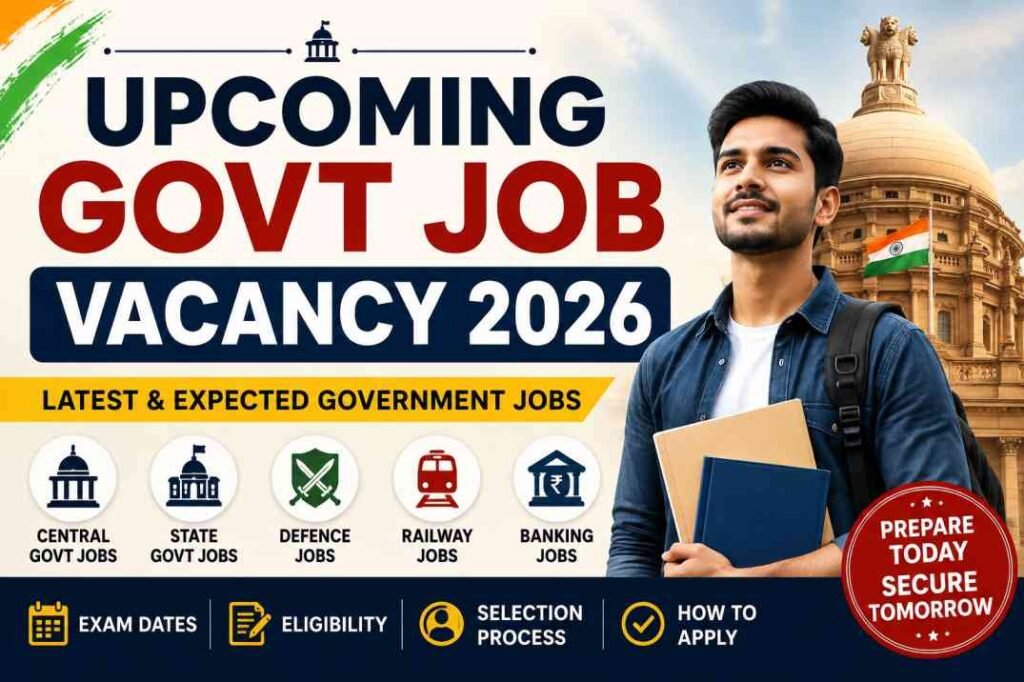
Upcoming Govt Job Vacancy 2026. As we move through 2026, the prospect of a career in public service continues to attract a diverse range of professionals. Government jobs offer a unique blend of stability, meaningful work, and comprehensive benefits that often stand apart from the private sector. For those aspiring to contribute to their communities and nation, understanding the evolving landscape of upcoming govt job vacancy 2026 is crucial. This article serves as a comprehensive guide, outlining the opportunities, application processes, and strategic preparation needed to embark on a fulfilling public service career.
Table of Contents
Introduction: Navigating Upcoming Government Job Vacancies in 2026
Upcoming Govt Job Vacancy 2026. The year 2026 presents a dynamic environment for government employment. While some sectors may experience shifts, the overall outlook for public service remains positive, with a steady demand for new talent across federal, state, and local agencies. We are witnessing a transformation within the public sector, driven by modernization and digital integration, which is reshaping the types of skills and roles agencies seek. This guide is designed to equip you with the knowledge to navigate this landscape effectively and position yourself for success in securing an upcoming govt job vacancy 2026.
Understanding the Government Job Landscape in 2026
The public sector workforce is substantial, with the U.S. federal government alone employing over 2.2 million civilians and an additional 19 million state and local government workers in 2026. The U.S. Bureau of Labor Statistics (BLS) projects a growth of approximately 5% in government employment between 2023 and 2033, translating to roughly 400,000 new positions.
However, this growth isn’t uniform. Recent data from May and July 2026 indicate that local governments are primarily driving public sector job gains, adding significant positions while federal payrolls have seen slight declines or remained flat in some periods. This trend suggests a strong emphasis on rebuilding post-pandemic service levels and leveraging federal infrastructure grants at the local level.
A significant shift in the 2026 public sector landscape is the increasing demand for new competencies. Agencies are modernizing operations and expanding digital services, requiring candidates who possess both administrative expertise and digital fluency. Digital literacy is now considered a baseline requirement, according to recent OECD reports. Furthermore, a “skills-first” revolution is underway, with government agencies increasingly prioritizing demonstrated technical skills over traditional degree-only filters, especially for high-demand roles in areas like coding, data management, and network security. This means that for many upcoming govt job vacancy 2026, practical abilities can be as, if not more, important than academic credentials alone.
Major Recruitment Sectors and Opportunities
Government job opportunities in 2026 are diverse, spanning numerous sectors and offering a wide array of roles. Aspiring candidates for an upcoming govt job vacancy 2026 should consider the following prominent recruitment areas:
- Administrative Services: These roles form the backbone of government operations, including positions in civil services, policy analysis, and general administration.
- Technology and IT: With the ongoing digital expansion and modernization efforts, there’s a surge in demand for tech-savvy administrators, data analysts, cybersecurity specialists, and IT professionals.
- Healthcare: The public sector continues to be a major employer in healthcare, with roles for doctors, nurses, medical researchers, and public health officials. Public investment in health services and demand for administrators overseeing programs like Medicaid are strong.
- Defense and Law Enforcement: Opportunities persist in areas such as the Army, Navy, and various police forces, contributing to national and local security.
- Education: From teachers to educational administrators, this sector remains critical, though recent reports indicate some declines in local government education employment in July 2026.
- Banking and Finance: Roles within institutions like the Reserve Bank and other public sector banks are available for finance professionals.
- Energy and Environment: As governments focus on renewable energy projects and environmental protection, jobs in these areas are growing.
- Infrastructure and Public Works: Local governments, in particular, are seeing job creation linked to infrastructure and industrial policy initiatives.
The broad range of government careers means that almost any skill set can find a home in public service, from engineers and public health officials to database administrators and transportation advisors.
JKSSB Jobs
JKSSB Official Website
Eligibility Criteria, Application Process, and Important Dates
Navigating the application process for an upcoming govt job vacancy 2026 requires careful attention to detail and a strategic approach.
Eligibility Criteria
While specific requirements vary by position and agency, common eligibility criteria for federal jobs typically include:
- Citizenship: Applicants must generally be a U.S. citizen or a U.S. national. For roles requiring security clearances, candidates are usually expected to have resided in the United States for most of the past five years.
- Age: Most applicants must be at least 18 years old.
- Educational Qualifications: A bachelor’s degree is often a minimum requirement for many government jobs, though specialized roles may demand advanced degrees or specific certifications. However, the “skills-first” hiring approach in 2026 means that demonstrated competencies can sometimes override strict degree requirements.
- Experience: Job postings will detail any required work experience.
- Background Checks: All applicants must submit to a background check, and many federal positions require at least a confidential or secret security clearance, which can take 6-12 months.
Certain individuals, such as current federal employees, veterans, military spouses, and recent graduates, may have access to special hiring paths and preferences, which can significantly enhance their chances.
Application Process for Upcoming Govt Job Vacancy 2026
The federal job application process, primarily through USAJOBS (usajobs.gov), has become more streamlined but also more competitive. Here’s a step-by-step guide:
- Register and Create a Profile: Set up an account on USAJOBS using login.gov. This allows you to save jobs, create a profile, and store resumes and required documents.
- Search for Openings: Utilize USAJOBS’ filters for location, agency, schedule, and salary to find relevant positions. Keep an eye on official websites of specific commissions (e.g., UPSC for civil services in some contexts) for recruitment notifications.
- Tailor Your Resume and Cover Letter: This is critical. Federal resumes are now strictly limited to two pages for many roles (GS05 to GS-11) and must be highly customized to each job posting. Highlight skills, competencies, accomplishments, and quantifiable achievements that directly match the job description, using keywords from the announcement. Generic resumes are unlikely to pass automated screening systems.
- Prepare Required Documents: Gather educational certificates, marksheets, licenses, and any other documents specified in the job posting. Upload them to your USAJOBS account in advance.
- Complete the Application: After finding a suitable position, click “apply” and follow the five necessary steps: add your tailored resume, upload documents, review the qualifications package, add personal information, and complete any agency-specific requirements.
- Address Essay Questions: For competitive federal postings at GS-05 and above, applicants often face four essay questions, each typically 200 words. These are not optional and should demonstrate your understanding of constitutional principles, government efficiency, executive order priorities, and integrity. While AI can be used for brainstorming, you must certify that you wrote the essays or were directly involved in their creation.
- Be Prepared for the Wait: The government hiring process can be longer than in the private sector, involving multiple rounds of checks. However, there’s a new 80-day “time-to-hire” target from posting to offer.
- Assessments and Interviews: Some agencies require written assessments or skills tests. Panel interviews are common, often following a behavioral format to assess integrity, honesty, and trustworthiness.
Important Dates
While specific dates for every upcoming govt job vacancy 2026 cannot be listed here, it’s vital to:
- Monitor Official Portals: Regularly check USAJOBS and specific agency websites.
- Note Application Deadlines: Federal job postings, especially from agencies like the Defense Human Resources Activity (DHA), can close within 48 to 72 hours, not weeks, emphasizing the need for prompt application.
- Anticipate Hiring Cycles: Be aware that the assessment and interview phases typically occur 3-4 months after application submission.
Effective Preparation Strategies for Aspiring Candidates
Securing an upcoming govt job vacancy 2026 demands thorough and strategic preparation. Here are key strategies:
- Understand the Exam Pattern and Syllabus: For positions requiring competitive exams (e.g., Civil Services Examination), thoroughly understand the structure, subjects, and marking scheme. This is the foundational step for any government job preparation.
- Create a Proper Study Plan: Develop a well-structured study schedule, allocating sufficient time to different subjects like mathematics, reasoning, English language, and general knowledge. Consistency is key to covering all topics.
- Focus on Basic Concepts: Build a strong foundation in core subjects. Many government exams test fundamental knowledge.
- Practice Previous Year Question Papers: Regularly solving past papers helps you understand the exam pattern, difficulty level, and frequently asked questions. It also improves problem-solving speed and accuracy.
- Take Mock Tests Regularly: Mock tests simulate exam conditions, helping you identify strengths and weaknesses, manage time effectively, and reduce exam-day anxiety.
- Stay Updated with Current Affairs: Many government exams include questions on current affairs and general awareness. Make it a habit to read newspapers and follow reliable news sources daily to stay informed about national and international events.
- Research the Agency and Role: Before an interview, thoroughly research the organization’s mission, recent initiatives, strategic priorities, and leadership. Understand the specific challenges the role might entail.
- Prepare for Behavioral Interviews: Government interviews often focus on behavioral questions to assess integrity, problem-solving, collaboration, and communication skills. Prepare specific examples using the STAR method (Situation, Task, Action, Result) to demonstrate your competencies.
- Optimize for Applicant Tracking Systems (ATS): Government HR systems heavily rely on keyword scanning. Ensure your resume and application use exact keywords from the job posting to pass initial filters.
Benefits and Long-Term Career Growth in Government Service
A career in government service offers a compelling package of benefits and opportunities for long-term growth, making an upcoming govt job vacancy 2026 an attractive prospect for many.
Key Benefits
- Job Security: Government jobs are renowned for their stability, often providing a secure career path even during economic downturns.
- Comprehensive Benefits Package:
- Retirement: Most federal government jobs include impressive pension or retirement packages designed to provide a livable income post-retirement.
- Insurance: Employees typically benefit from full health insurance coverage, often with minimal personal costs, and potentially continuing benefits for families after retirement. Life insurance is also commonly offered.
- Thrift Savings Plan (TSP): Similar to a 401(k), the TSP allows federal employees to save for retirement with government matching contributions.
- Generous Leave: Federal employees receive substantial sick and annual leave, which increases with years of service.
- Student Loan Repayment and Forgiveness: Many government positions offer programs for student loan repayment or forgiveness, a significant financial advantage.
- Flexible Work Schedules: Options for flexible work arrangements are often available, contributing to a better work-life balance.
- Meaningful Work: A strong motivator for many is the opportunity to serve the public, make a tangible difference, and contribute to the nation’s development.
While base public sector wages may sometimes grow more slowly than in the private sector, the robust benefits packages often make the total compensation highly competitive.
Long-Term Career Growth
Government service provides numerous avenues for professional development and career advancement:
- Professional Development: Agencies often invest in training, certifications, and educational opportunities for their employees.
- Broad Job Range and Mobility: The vastness of government means a wide variety of roles and the potential to transfer between departments or agencies, offering diverse career experiences without losing benefits or seniority.
- High-Impact, Mission-Critical Work: With a focus on lean, high-output projects, individuals hired into government roles, especially with the current “4-to-1 attrition rule” (where only one person is hired for every four who leave), are often given immediate and substantial responsibility, leading to significant impact.
- Skills-Based Advancement: The shift towards skills-based hiring and evaluation means that professionals with high-demand technical skills can rapidly advance into higher-grade roles (e.g., GS-11 or GS-12) based on demonstrated abilities rather than solely on years of experience or academic degrees.
While some sources might mention bureaucracy or slow change as potential downsides, the emphasis on modernization and digital integration in 2026 suggests a more dynamic environment, especially for those with relevant skills.
Frequently Asked Questions (FAQ)
To further assist you in your pursuit of an upcoming govt job vacancy 2026, here are answers to some common questions:
- Q: Where can I find legitimate government job postings for 2026? A: For federal jobs in the U.S., USAJOBS (usajobs.gov) is the official portal. For state and local opportunities, check individual state and city government websites, as well as specific agency recruitment pages.
- Q: How long does the government job application process typically take? A: The process can be lengthy, sometimes taking several months due to multiple screening rounds, background checks, and security clearances. However, the federal government has a target of 80 days from job posting to offer.
- Q: Do I need a security clearance for all government jobs? A: No, but many federal positions, especially those involving sensitive information, require at least a confidential or secret clearance. The job posting will specify if one is needed.
- Q: What is the most important part of a government job application? A: Tailoring your resume and cover letter to each specific job announcement, using keywords from the description, and highlighting relevant skills and achievements is paramount. For federal jobs, adhering to the strict two-page resume limit is crucial.
- Q: Are government jobs only for specific fields like administration or defense? A: Absolutely not. Government employs professionals across nearly every industry, including IT, healthcare, engineering, finance, education, and environmental science.
- Q: How can I improve my chances if I’m a recent graduate? A: Leverage the “skills-first” hiring approach by highlighting any internships, projects, certifications, or bootcamp experience that demonstrate in-demand technical skills. Look for specific hiring paths for recent graduates on USAJOBS.
- Q: How do government salaries compare to the private sector? A: While public sector base wages have sometimes lagged private sector growth, government roles offer stronger benefits packages, including pensions, health coverage, and student loan repayment. When total compensation is considered, government jobs can be very competitive.
Conclusion: Charting Your Path to a Fulfilling Public Service Career in 2026
The landscape of upcoming govt job vacancy 2026 offers a wealth of opportunities for dedicated individuals seeking stable, impactful, and rewarding careers. From the ongoing digital transformation driving demand for tech-savvy professionals to the consistent need for administrative and healthcare personnel, public service remains a vital and expanding sector.
By understanding the unique eligibility criteria, mastering the detailed application process, and implementing effective preparation strategies, aspiring candidates can significantly enhance their prospects. The unparalleled benefits, including robust retirement plans, comprehensive insurance, and the profound satisfaction of serving the public, make a government career a truly compelling choice. As we look ahead, charting your path to a public service career in 2026 means embracing a commitment to continuous learning, strategic application, and a passion for making a difference in the world.